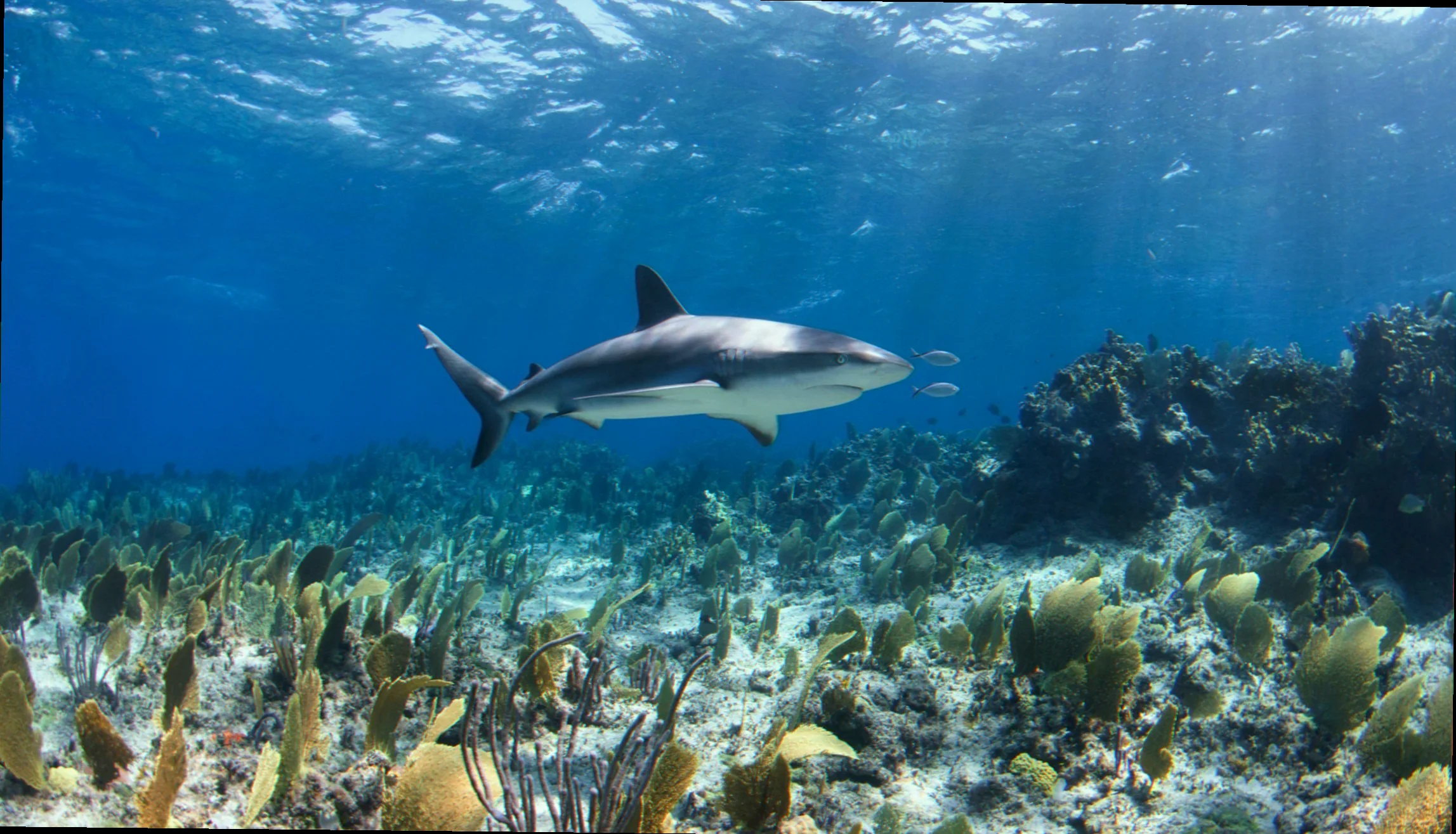
Ecological significance: Shark habitat utilization patterns within the Swain Reefs complex are critical for maintaining the structural integrity and biodiversity of the southern Great Barrier Reef ecosystem. As high-level mesopredators and apex predators, these sharks exert top-down pressure that regulates the abundance and behavior of herbivorous and corallivorous fish, indirectly protecting coral cover from overgrazing and phase shifts. If these utilization patterns were disrupted or the populations removed, the resulting trophic cascade would likely lead to an uncontrolled expansion of smaller predators and a subsequent collapse of the functional diversity required for reef resilience.
Species Profile
| Attribute | Data |
|---|---|
| Scientific name | Carcharhinus amblyrhynchos (Bleeker, 1856) |
| Trophic level | Apex Predator / High-order Mesopredator |
| Population estimate | Approximately 10 to 15 individuals per hectare in high-density zones (based on AIMS long-term monitoring proxy) |
| Native range | Queensland (Great Barrier Reef), Western Australia, Northern Territory, and Indo-Pacific coral reefs |
| EPBC Act status | Not listed (though assessed as Endangered globally by the IUCN) |
Position in the Food Web
- Prey species: The primary diet consists of reef-associated teleost fish, including damselfish (Pomacentridae), parrotfish (Scaridae), and surgeonfish (Acanthuridae), as well as cephalopods like the Reef Squid (Sepioteuthis lessoniana). Hunting often involves coordinated "herding" behaviors against reef faces or burst-speed ambushes in high-current channels.
- Predators: Juvenile reef sharks and smaller adults are frequently preyed upon by the Tiger Shark (Galeocerdo cuvier) and occasionally by large Great Hammerheads (Sphyrna mokarran) that patrol the deeper drop-offs of the Swain Reefs.
- Competitors: Interspecific competition for foraging space and prey occurs with the Whitetip Reef Shark (Triaenodon obesus) and the Galapagos Shark (Carcharhinus galapagensis), particularly in the narrow "bommie" fields where niche overlap is highest.
- Symbiotic partners: A well-documented mutualistic relationship exists with the Bluestreak Cleaner Wrasse (Labroides dimidiatus), which removes ectoparasites from the shark's skin and gill slits at specific "cleaning stations" located along the reef crest.
- Keystone role: The Grey Reef Shark acts as an indicator species; its presence and movement patterns reflect the overall biomass and health of the reef's fish community and the availability of complex structural habitats.
Habitat Requirements and Microhabitat Use
The Swain Reefs, located approximately 200 kilometers off the Queensland coast, represent a unique high-energy environment characterized by a maze of detached reefs and deep inter-reef channels. Shark habitat utilization here is strictly dictated by bathymetry and water movement. The primary bioregion involved is the Great Barrier Reef Marine Park, specifically the southern offshore carbonate platforms. These sharks require high-relief coral structures and steep drop-offs (slopes) that provide both refuge from larger oceanic predators and access to upwelling nutrients.
Microhabitat use within the Swain complex is often partitioned by time of day. During daylight hours, sharks aggregate in "social groups" near the reef crest or on the leeward side of the reef to conserve energy in calmer waters. As nocturnal cycles begin, utilization shifts toward the reef flat and deeper lagoonal floors, where they exploit the increased activity of nocturnal prey. The presence of "pinnacles" or isolated coral bommies within the Swain Reefs serves as a critical focal point for these movements, acting as navigational landmarks and concentrated feeding grounds.
Reproductive Strategy and Population Dynamics
Reef sharks in the Swain Reefs exhibit a distinct K-selected reproductive strategy, characterized by slow growth, late sexual maturity (often 7-10 years), and low fecundity. They are viviparous with a yolk-sac placenta, giving birth to live young after a gestation period of approximately 12 months. Breeding triggers are closely tied to seasonal sea-surface temperature (SST) increases, typically peaking in the late austral spring and early summer. Juvenile survival is heavily dependent on the availability of "nursery" habitats-shallow, protected lagoonal areas with high structural complexity where larger predators cannot easily maneuver.
Population growth is strictly limited by the "carrying capacity" of the reef, which is defined by the available biomass of prey fish. Because of their slow reproductive turnover, the population is highly sensitive to external shocks. Acoustic telemetry studies have shown that many individuals exhibit high site fidelity, meaning they remain within a specific reef cluster for years. This localized population dynamic means that the loss of sharks from a single reef in the Swain complex is not easily mitigated by immigration from neighboring reefs, making local extinction a significant risk.
Threats and Vulnerability Analysis
- Introduced species pressure: While direct feral threats are minimal in marine environments, the influx of the Crown-of-Thorns Starfish (Acanthaster planci) indirectly threatens shark habitat by destroying the coral architecture that supports their prey base.
- Land-use change: While the Swain Reefs are offshore, terrestrial runoff from Queensland river systems during flood events can carry pollutants and sediment that reach the outer reef, potentially affecting the sensory systems (electroreception) of sharks and reducing visibility for hunting.
- Climate projections: By 2050, projected increases in sea temperatures and ocean acidification pose an existential threat. Coral bleaching events reduce the structural complexity of the reef, leading to a "flattening" of the habitat which removes the ambush sites and nurseries essential for shark survival.
- Disease: While rare, sharks are susceptible to various bacterial infections and skin parasites that can proliferate in warming waters, potentially impacting the fitness of populations already stressed by habitat loss.
Recovery Actions and Research Gaps
Current management relies heavily on the Great Barrier Reef Marine Park Authority (GBRMPA) zoning plans, which include "Green Zones" (no-take areas) that encompass significant portions of the Swain Reefs. These zones are vital for protecting the resident shark populations from commercial and recreational fishing pressure. There are currently no captive breeding programs for these species, as conservation focus remains on "in-situ" habitat protection and the mitigation of global carbon emissions to preserve the reef substrate.
A critical research gap remains in understanding the "connectivity" between the Swain Reefs and the more northern or coastal reef systems. While we have data on local movements, the frequency and drivers of long-distance dispersal across deep-water channels are poorly understood. Identifying these "blue corridors" is essential for designing a network of protected areas that can support shark populations as they potentially shift their ranges in response to climate change.
Ecological FAQ
Why is Swain reefs shark habitat utilization patterns important to its ecosystem?
The specific ways sharks use the Swain Reefs-patrolling the edges and congregating at cleaning stations-distribute nutrients across the reef and prevent any single prey species from dominating the ecosystem. By forcing prey to remain vigilant and utilize different parts of the reef, sharks ensure that grazing pressure is spread evenly, which prevents the overconsumption of algae and promotes coral recruitment.
How has the Swain reefs shark habitat utilization patterns population changed over the last 50 years?
Historical data, including shark control program records and anecdotal evidence from long-term dive operators, suggest a decline in reef shark abundance across the GBR. In the Swain Reefs, while they remain more insulated than inner-shelf reefs, populations have likely decreased due to illegal, unreported, and unregulated (IUU) fishing and the cumulative impacts of several major bleaching events that have degraded their primary habitat.
What can individuals do to support Swain reefs shark habitat utilization patterns conservation?
Individuals can support conservation by choosing sustainably sourced seafood to reduce the demand for fisheries that may result in shark bycatch. Additionally, supporting organizations that conduct non-invasive research, such as citizen science programs like "Eye on the Reef," helps managers monitor shark sightings and habitat health in remote areas like the Swain Reefs.