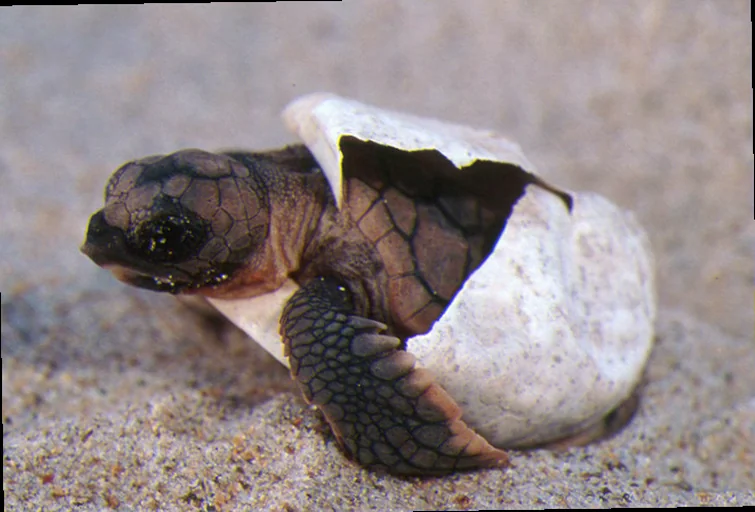
Ecological significance: Loggerhead turtle hatchlings represent a crucial, yet highly vulnerable, life stage within Australia's marine and coastal ecosystems. As a primary energy transfer point from the terrestrial nesting environment to the vast oceanic food web, their survival rates directly impact the availability of prey for numerous coastal and pelagic predators. A significant decline in hatchling survival would not only jeopardise the long-term viability of this endangered species but also create trophic cascades, potentially altering predator populations reliant on this ephemeral but abundant food source.
Species Profile
| Attribute | Data |
|---|---|
| Scientific name | Caretta caretta (Linnaeus, 1758) |
| Trophic level | Prey item (for secondary and tertiary consumers) |
| Population estimate | Estimated 500-2000 nesting females annually in eastern Australia, primarily Queensland (Commonwealth of Australia, 2017) |
| Native range | Nests primarily in Queensland, with some occurrences in Western Australia and Northern Territory; globally distributed in tropical and temperate oceans. |
| EPBC Act status | Endangered |
Position in the Food Web
- Prey species: Loggerhead turtle hatchlings are not prey species themselves; they are the prey. However, their initial energy source is the yolk sac from the egg, a nutrient-rich package deposited by the adult female.
- Predators: Hatchlings face an gauntlet of predators from the moment they emerge from the nest. On nesting beaches, terrestrial predators include the introduced Red Fox (Vulpes vulpes), feral pigs (Sus scrofa), dingoes (Canis familiaris dingo), and native species such as Lace Monitors (Varanus varius) and various gulls (e.g., Silver Gull, Chroicocephalus novaehollandiae) and raptors. As they make their perilous journey to the sea, ghost crabs (Ocypode spp.) are significant predators. Once in the marine environment, the challenges continue, with numerous fish species (e.g., reef sharks, tuna, snapper), seabirds (e.g., frigatebirds, terns), and other marine reptiles preying on the tiny hatchlings.
- Competitors: While hatchlings do not directly compete for food resources during their initial exodus (as they are yolk-dependent), they may experience indirect competition for crucial resources. For instance, Loggerhead hatchlings may compete with hatchlings of other marine turtle species, such as Green Turtles (Chelonia mydas) or Flatback Turtles (Natator depressus), for optimal emergence timings, clear paths to the ocean, or undisturbed nesting beach microhabitats that offer protection from predators or artificial light. Competition for suitable, dark nesting beaches by adult females can also indirectly influence the overall number of clutches and subsequent hatchling cohorts.
- Symbiotic partners: Direct symbiotic relationships are not typically observed during the immediate hatchling survival phase. However, as they grow into juveniles and adults, Loggerhead turtles host a range of commensal organisms on their shells (epibionts) and engage in mutualistic cleaning behaviours with cleaner fish species.
- Keystone role: While Loggerhead turtle hatchlings do not individually hold a keystone role, the species as a whole is considered an indicator species. Their health and population trends reflect the overall condition of marine and coastal ecosystems, particularly regarding ocean pollution, climate change impacts, and fisheries management effectiveness. The high mortality rates of hatchlings underscore the fragility of this indicator.
Habitat Requirements and Microhabitat Use
Loggerhead turtle hatchling survival is intrinsically linked to the integrity and specific characteristics of their nesting beaches. These typically consist of subtropical and tropical sandy beaches, often backed by dunes or coastal vegetation, providing suitable substrate for egg incubation. Key Australian nesting sites are predominantly found along the Queensland coast, within the Great Barrier Reef bioregion, notably at Mon Repos, Wreck Rock, and other beaches in the Bundaberg region. Specific microhabitat conditions within the nest are critical: sand temperature dictates both the incubation period and the sex of the hatchlings (Temperature-Dependent Sex Determination), with warmer sands producing females and cooler sands producing males. Optimal moisture levels are also essential to prevent desiccation or fungal growth. Upon emergence, hatchlings navigate towards the lowest, brightest horizon - typically the ocean - using a combination of light cues and geotaxis. Their immediate marine microhabitat, often referred to as the "lost years," is thought to involve dispersal into offshore currents, frequently associated with Sargassum rafts or oceanic fronts, which provide shelter, food, and transport in the open ocean.
Reproductive Strategy and Population Dynamics
Loggerhead turtles exhibit an r-selected reproductive strategy, characterised by the production of a large number of offspring with a relatively low individual probability of survival to adulthood. Females typically nest multiple times within a season, laying clutches of around 100-120 eggs. Breeding is triggered by a combination of environmental cues, including water temperature, photoperiod, and potentially rainfall events that influence nesting beach conditions. After approximately 60-80 days of incubation, hatchlings emerge en masse. The juvenile survival rate for Loggerhead turtles is notoriously low; it is widely estimated that only 1 in 1,000 to 1 in 10,000 hatchlings survive to reach reproductive maturity, which occurs at around 25-30 years of age. This immense attrition rate is the primary factor limiting population growth. Predation pressure, both terrestrial and marine, is exceptionally high during the hatchling and early juvenile stages. Other factors limiting population growth include the loss of nesting habitat, marine pollution, and fisheries bycatch of older juveniles and adults, all of which reduce the number of reproductive individuals capable of contributing to the next generation of hatchlings.
Threats and Vulnerability Analysis
- Introduced species pressure: Feral predators pose a significant threat to Loggerhead turtle hatchling survival in Australia. The Red Fox (Vulpes vulpes) is a notorious egg and hatch