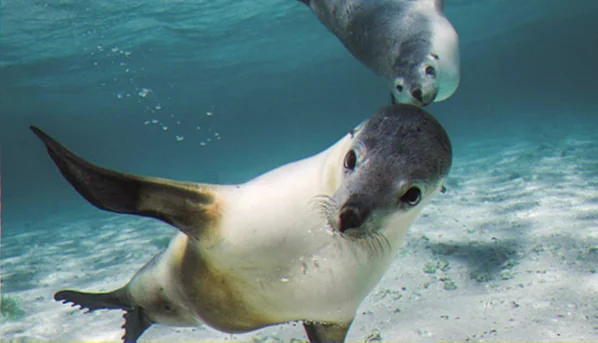
Ecological significance: The marine mammals targeted by Jurien Bay research projects, primarily the Australian Sea Lion (Neophoca cinerea), serve as apex predators that regulate benthic fish and cephalopod communities within the temperate reef systems of Western Australia. As high-level consumers, they maintain the structural integrity of the food web; their removal would trigger a mesopredator release, potentially leading to the overgrazing of seagrass meadows by unchecked prey populations. These research projects provide critical data on the health of the Jurien Bay Marine Park, acting as a sentinel for the broader impacts of the Leeuwin Current's variability on Western Australian marine biodiversity.
Species Profile
| Attribute | Data |
|---|---|
| Scientific name | Neophoca cinerea (Péron, 1816) |
| Trophic level | Apex predator (Benthic carnivore) |
| Population estimate | Approximately 10,000-12,000 individuals remaining (DCCEEW, 2023) |
| Native range | Endemic to Australia; found from the Houtman Abrolhos (WA) to The Pages (SA) |
| EPBC Act status | Endangered |
Position in the Food Web
- Prey species: Research indicates a diverse diet including the Western Rock Lobster (Panulirus cygnus), various cephalopods such as the Giant Cuttlefish (Sepia apama), and benthic fish species like the Western Blue Groper (Achoerodus gouldii). Hunting involves specialized "bottom-dwelling" foraging where the mammals use vibrissae (whiskers) to detect movement in murky substrate.
- Predators: The primary natural predator is the Great White Shark (Carcharodon carcharias), which frequently patrols the waters surrounding Jurien Bay breeding colonies like Buller and North Fisherman Islands. Large Tiger Sharks (Galeocerdo cuvier) also pose a significant threat to pups and juveniles.
- Competitors: In Jurien Bay, there is significant niche overlap with the Long-nosed Fur Seal (Arctocephalus forsteri). While fur seals are more generalist foragers, they compete for similar haul-out spaces and occasionally for schooling fish resources.
- Symbiotic partners: These mammals host various endoparasites, most notably hookworms (Uncinaria spp.), which can influence pup mortality rates. They also engage in a commensal relationship with various species of marine birds, such as Silver Gulls (Chroicocephalus novaehollandiae), which scavenge on nutrient-rich placenta and scraps during the pupping season.
- Keystone role: The Australian Sea Lion is considered a keystone species because its foraging behavior influences the distribution and abundance of benthic invertebrates, thereby shaping the physical structure of the underwater limestone reef communities.
Habitat Requirements and Microhabitat Use
The subjects of Jurien Bay marine mammal research projects require highly specific habitat configurations within the Central West Coast bioregion. They utilize the offshore limestone islands of the Jurien Bay Marine Park for breeding and hauling out, specifically preferring sandy beaches protected by complex reef systems that buffer the heavy Indian Ocean swell. The surrounding marine environment is dominated by extensive seagrass meadows of Posidonia and Amphibolis, which provide essential nurseries for their prey. Sub-tidally, these mammals depend on "macroalgal forests" dominated by Ecklonia radiata (kelp), where they hunt for cryptic fish. The proximity of deep-water foraging grounds to these low-lying islands is vital, as females must balance lactation with high-energy hunting trips in the nutrient-poor waters influenced by the warm Leeuwin Current.
Reproductive Strategy and Population Dynamics
The Australian Sea Lion exhibits an extreme K-selected reproductive strategy, characterized by low fecundity and high parental investment. Unlike most pinnipeds that breed annually, Neophoca cinerea follows a unique 17.5-month asynchronous breeding cycle. This means breeding seasons at different colonies are not synchronized in time, making the population highly vulnerable to localized catastrophic events. Breeding triggers are not strictly seasonal but appear linked to a complex internal biological clock rather than photoperiod or temperature alone. Juvenile survival is precarious, with pup mortality often exceeding 20% due to factors like shark predation, male aggression (conspecific trauma), and disease. Population growth is fundamentally limited by the species' high site fidelity (philopatry), where females return only to their natal islands to breed, preventing the rapid recolonization of former ranges.
Threats and Vulnerability Analysis
- Introduced species pressure: While terrestrial feral predators are limited on islands, the risk of pathogen spillover from domestic animals (e.g., Toxoplasma gondii from feral cats) via urban runoff into the marine environment remains a growing concern for researchers.
- Land-use change: Historical sealing in the 18th and 19th centuries decimated populations, but contemporary threats include entanglement in commercial fishing gear, particularly "ghost nets" and abandoned pots from the rock lobster industry, which can cause slow mortality through constriction and starvation.
- Climate projections: By 2050, projected increases in Sea Surface Temperatures (SST) and more frequent marine heatwaves (similar to the 2011 Ningaloo event) are expected to shift the distribution of prey species southward. This could force lactating females to travel further to find food, increasing the risk of pup starvation.
- Disease: Hookworm infestations in pups and potential outbreaks of phocine distemper virus represent significant biological vulnerabilities for the small, isolated colonies found in Jurien Bay.
Recovery Actions and Research Gaps
Current recovery actions are guided by the "Australian Sea Lion Recovery Plan," which includes the mandatory use of Sea Lion Exclusion Devices (SLEDs) in the Western Rock Lobster fishery to prevent pups from entering and drowning in pots. Captive breeding has not been extensively implemented due to the complexity of the 17.5-month cycle; instead, focus remains on "in-situ" protection and the establishment of Gillnet Exclusion Zones. A critical data gap remains in our understanding of the foraging energetics of juvenile sea lions. Researchers currently lack fine-scale data on how "micro-scale" habitat features influence the hunting success of young sea lions during their transition to independence, which is a high-risk period for the species' survival.
Ecological FAQ
Why is Jurien bay marine mammal research projects important to its ecosystem?
These research projects are vital because they track the health of the Australian Sea Lion, which acts as a "bio-indicator." Because these mammals occupy a high trophic level, changes in their population health, pup survival rates, or foraging durations provide immediate feedback on the health of the entire Jurien Bay Marine Park, including the status of fish stocks and the impacts of climate-driven changes in the Leeuwin Current.
How has the Jurien bay marine mammal research projects population changed over the last 50 years?
The population has shown a concerning downward trend, with an estimated 60% decline across the species' range over the last three generations. In Jurien Bay specifically, while some colonies have remained stable due to strict management of the rock lobster fishery and island access, the overall recruitment of new breeding females remains low, largely due to the species' unique and slow reproductive biology which prevents quick recovery from historical depletion.
What can individuals do to support Jurien bay marine mammal research projects conservation?
Individuals can contribute by adhering to "Doubtful Island" and other sanctuary zone regulations, ensuring a minimum distance of 50 to 100 meters from hauled-out sea lions to prevent stress and colony abandonment. Furthermore, participating in citizen science programs like "Coastal Cleanups" helps remove marine debris and plastics that lead to entanglement. Supporting sustainable, MSC-certified Australian seafood also ensures that commercial fishing practices continue to implement sea lion safety measures.