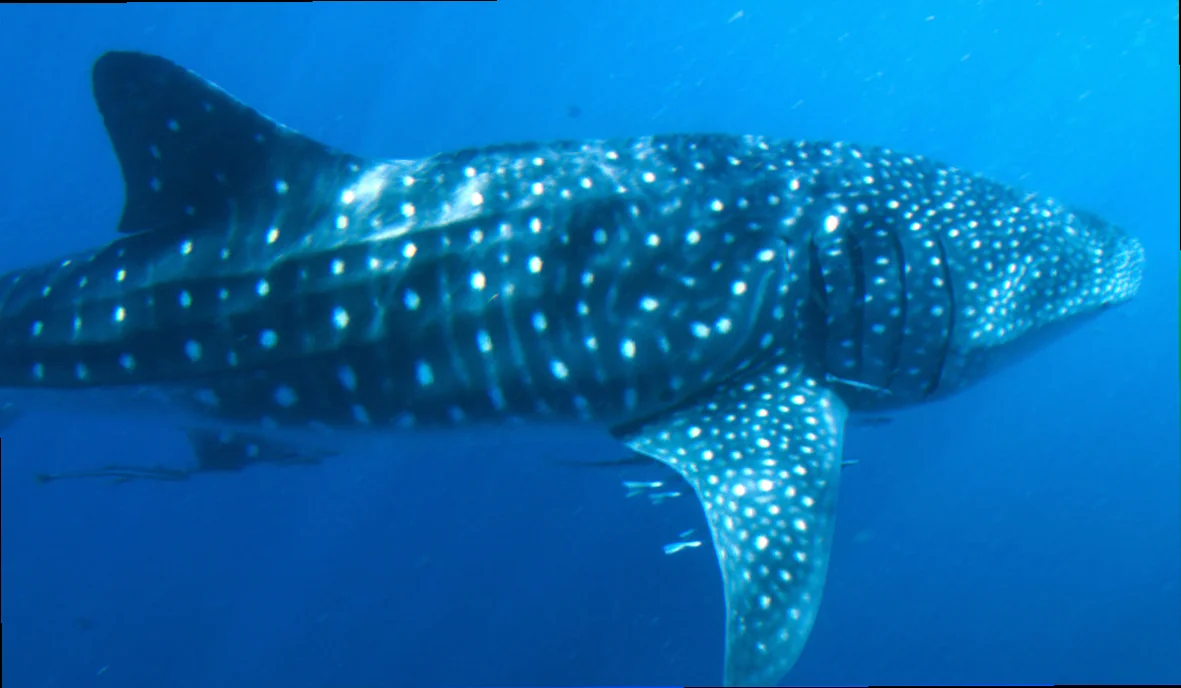
Ecological significance: Whale sharks (Rhincodon typus) visiting the Great Barrier Reef occupy a crucial, though somewhat unusual, trophic level as planktivores. They act as a vital link between primary producers (phytoplankton) and higher trophic levels, effectively transferring energy up the food web. Their presence indicates a healthy plankton biomass, and their occasional scavenging contributes to nutrient cycling. A decline in whale shark numbers would likely disrupt plankton community structure and potentially impact the foraging success of other filter feeders, like manta rays and some seabirds.
Species Profile
| Attribute | Data |
|---|---|
| Scientific name | Rhincodon typus Smith, 1828 |
| Trophic level | Planktivore/Secondary Consumer |
| Population estimate | Globally, estimates range from 7,000 to 10,000 mature individuals (Stevens et al., 2009). Australian populations are poorly quantified, but tagging data suggests approximately 200-300 individuals regularly visit the Ningaloo Reef and Great Barrier Reef aggregation sites annually. |
| Native range | Cosmopolitan, found in tropical and warm-temperate waters globally. In Australia, they are commonly observed off Western Australia (Ningaloo Reef), Queensland (Great Barrier Reef, Coral Sea), and occasionally in New South Wales and Northern Territory. |
| EPBC Act status | Listed as Vulnerable |
Position in the Food Web
- Prey species: Whale sharks primarily feed on plankton, including zooplankton (copepods, krill, salps) and phytoplankton. They employ ram filtration, swimming with their mouths open to filter vast quantities of water. They also opportunistically feed on small fish larvae and fish eggs. They are known to target blooms of Noctiluca scintillans, a bioluminescent dinoflagellate, particularly during nighttime feeding events.
- Predators: While adult whale sharks have few natural predators due to their size, they are occasionally preyed upon by tiger sharks (Galeocerdo cuvier), particularly juveniles. Shark attacks are often scavenging events on already deceased whale sharks, but documented predation on live individuals exists.
- Competitors: Whale sharks compete with other large filter feeders for plankton resources. Manta rays (Manta birostris) and megamouth sharks (Megachasma pelagios) share similar feeding strategies and can occupy the same foraging grounds, leading to potential competition, especially during periods of low plankton abundance.
- Symbiotic partners: Whale sharks are frequently accompanied by remoras (family Echeneidae), which attach themselves to the shark's skin using a modified dorsal fin. This is a commensal relationship; remoras gain transportation, protection, and access to food scraps, while the whale shark is generally unaffected. They also host various copepod species as ectoparasites.
- Keystone role: Whale sharks are not typically considered a classic keystone species, but they function as an indicator species. Their presence and health reflect the overall health of the plankton community and the broader marine ecosystem. Their large-scale movements also contribute to nutrient redistribution.
Habitat Requirements and Microhabitat Use
Whale sharks are pelagic, meaning they inhabit the open ocean, but they aggregate in coastal areas with high plankton concentrations. On the Great Barrier Reef, they are commonly found in areas with upwelling currents and strong tidal flows, which promote plankton blooms. Specific locations include the Ribbon Reefs, Osprey Reef, and the waters around Lady Elliot Island. They prefer water temperatures between 21-30°C. The bioregion of the Coral Sea, encompassing much of the Great Barrier Reef, provides the necessary conditions for their feeding and aggregation. They demonstrate a preference for surface waters, often feeding at depths of less than 20 meters, but are capable of diving to depths exceeding 1,800 meters. Microhabitat use is strongly tied to plankton patchiness, with sharks actively seeking out areas of high prey density.
Reproductive Strategy and Population Dynamics
Whale sharks exhibit a K-selected reproductive strategy, characterized by slow growth, late maturity, and low fecundity. They are ovoviviparous, meaning eggs hatch internally, and pups are born live. Breeding is poorly understood, but it is believed to occur in tropical waters, potentially near the Philippines and Indonesia. Females can store sperm for extended periods. Litter sizes are exceptionally large, with one documented case revealing over 300 pups. Juvenile survival rates are unknown but presumed to be low due to predation and limited food availability. Population growth is likely limited by slow reproductive rates and high natural mortality, particularly in the early life stages. The long lifespan (estimated at 70-100 years) further contributes to slow population turnover.
Threats and Vulnerability Analysis
- Introduced species pressure: While not a direct threat, plastic pollution, a form of introduced waste, is ingested by whale sharks, potentially causing internal injuries and reducing feeding efficiency.
- Land-use change: Agricultural runoff from coastal catchments, particularly in Queensland, introduces excess nutrients into the Great Barrier Reef lagoon, contributing to algal blooms that can disrupt plankton communities and potentially harm whale sharks.
- Climate projections: By 2050, projected increases in sea surface temperatures and ocean acidification are expected to negatively impact plankton distribution and abundance, reducing food availability for whale sharks. Increased frequency and intensity of marine heatwaves could also lead to coral bleaching events, indirectly affecting whale shark foraging habitats.
- Disease: Fibropapillomatosis, a viral disease causing tumor growth, has been observed in whale sharks in other regions, but its prevalence and impact on Australian populations are currently unknown.
Recovery Actions and Research Gaps
Current recovery actions include listing as a Vulnerable species under the EPBC Act, which provides some protection against harm. The Queensland government implements regulations for whale shark tourism, aiming to minimize disturbance. Citizen science initiatives, such as the Wild Me whale shark identification platform, contribute to population monitoring. A critical research gap is a better understanding of whale shark reproductive biology and pupping grounds. Identifying and protecting these critical habitats is essential for population recovery. Further research is also needed to assess the long-term impacts of climate change and plastic pollution on whale shark health and survival.
Ecological FAQ
Why is Basking whale shark diet great barrier reef important to its ecosystem?
Whale sharks play a crucial role in regulating plankton populations, preventing excessive blooms that could lead to oxygen depletion and harm other marine life. Their feeding activity also mixes the water column, distributing nutrients and promoting primary productivity. Furthermore, their fecal matter releases essential nutrients back into the water, contributing to the overall health and resilience of the reef ecosystem.
How has the Basking whale shark diet great barrier reef population changed over the last 50 years?
Historically, whale sharks were actively hunted in some regions, but this practice has largely ceased. However, the population has likely declined over the last 50 years due to a combination of factors, including bycatch in fisheries, habitat degradation, and climate change. While precise data is lacking, increased sightings in aggregation areas may reflect a shift in distribution rather than a population increase, potentially driven by declining food availability elsewhere. The global population is estimated to have declined by over 60% in the last 75 years.
What can individuals do to support Basking whale shark diet great barrier reef conservation?
Individuals can reduce their plastic consumption to minimize plastic pollution, support sustainable seafood choices to reduce bycatch, and advocate for stronger marine conservation policies. Participating in responsible whale shark tourism, choosing operators committed to ethical practices, can also contribute to conservation efforts. Supporting organizations involved in whale shark research and monitoring is another effective way to help protect these magnificent creatures.